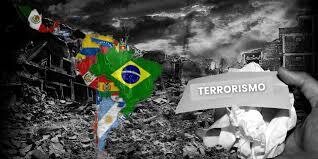
In Latin America, the threat of Islamic radicalism from groups like Hezbollah and the Islamic State of Iraq and Syria (ISIS) has been increasing, as evidenced by several recently thwarted attacks by law enforcement.
One of the most significant strategic changes identified is the recruitment of locals to carry out terrorist attacks, as seen in the case of Operation Trapiche in Brazil, where Hezbollah attempted to perpetrate attacks against Jewish communities. A Salafist network was also discovered in the state of Amazonas with ideological links similar to those of ISIS.
Recruiting local natives without prior ideological affiliation with terrorist organizations is a tactic aimed at destabilizing regions, according to experts in the field. Moreover, the use of social media and messaging applications to recruit and spread extremist ideology is an increasing strategy.
The rise of Islamic radicalism in Trinidad and Tobago has been a cause for concern, especially as these islands have been a significant starting point for foreign fighters who joined ISIS in the past. The lack of visa requirements to travel to other parts of the Caribbean from Trinidad and Tobago also presents a risk of spreading extremism in the region.
Another highlighted aspect is the use of illicit activities, such as money laundering through cryptocurrencies, to finance terrorist operations. Local authorities have thwarted attempts at terrorist attacks during major events, such as Carnival, by Islamic extremists.
In addition to ties with Hezbollah, connections with Iran have been identified in the region. The fusion of indigenous teachings with revolutionary Shia Islam, as in the case of Inkarri-Islam in Peru, illustrates how vulnerabilities in marginalized communities are exploited to recruit followers and finance illicit activities of terrorist organizations.
In summary, the convergence of groups like Hezbollah and ISIS in Latin America poses significant challenges for regional security, with the recruitment of locals, financing through illegal activities, and the spread of extremist ideologies being the main concerns identified by experts.